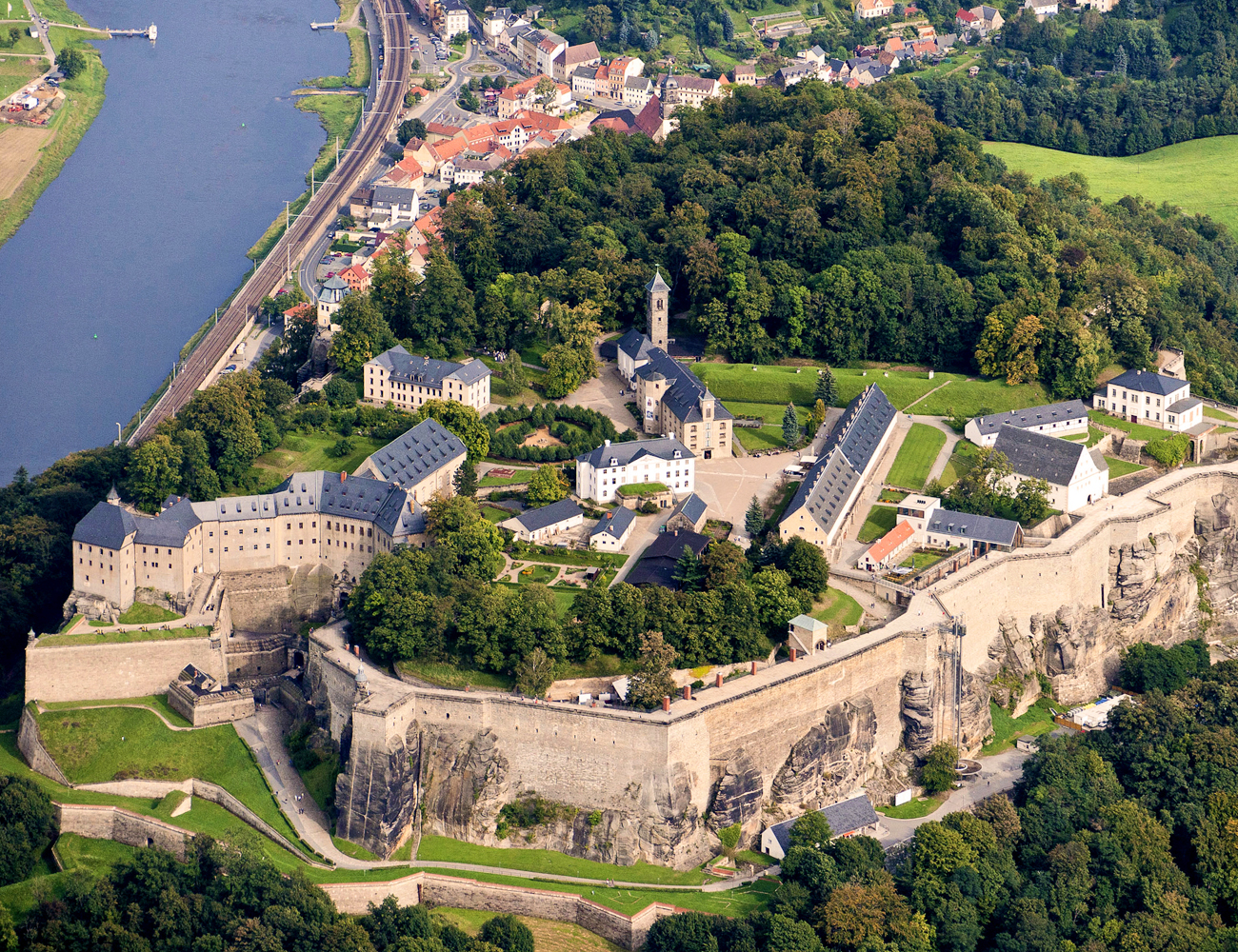
Stahleck Castle has been sieged eight times, blown up by the French, and reborn from its own rubble. It is one of the most dramatic stories carved in stone.
Victor Hugo once called the little town below it “one of the most beautiful cities in the world.” But most people who look up from Bacharach’s cobblestone streets don’t see a city — they see a castle. Stahleck. Stone-grey, unblinking, perched 160 meters above the Rhine like something that simply refused to leave.
Its name gives the game away. Stahleck — from the Middle High German stahel and ecke — translates roughly as “impregnable castle on a crag.” Whether that was wishful thinking or genuine confidence, history would put it to the test, again and again and again.
Born of Power, Shaped by War
The earliest confirmed record of Stahleck dates to 1134, when documents place it in the hands of one Goswin von Stahleck under the authority of the Archbishop of Cologne. But the stones were likely laid even earlier — historians now believe the site was occupied as far back as 1095. The archbishop wasn’t building a summer retreat. He wanted a fortress that would let him control the Rhine, one of medieval Europe’s most profitable trade arteries, and remind anyone sailing past exactly who was in charge.
For centuries it worked. Stahleck became what chroniclers called the strongest fortress on the Middle Rhine — a center of Rhenish Palatinate power, a stage for dynastic intrigue, and, in 1194, the secret venue for one of the era’s most politically explosive weddings.
Agnes, the heiress of Stahleck, was quietly married here to Henry the Elder of Brunswick — uniting two families locked in bitter feud. It was not exactly a church blessing; it was a political grenade with a very slow fuse.
— The Wedding at Stahleck, 1194
That union sent the castle tumbling through the hands of the Guelphs and then, in 1214, to the powerful Wittelsbach dynasty under Duke Ludwig I. Kings moved through. Emperors made decisions in its halls. And the Rhine kept flowing below.

Eight Sieges and a Very Patient Enemy
Then came the Thirty Years’ War (1618–1648), and Stahleck’s legendary impregnability was shattered — not once, but eight times. The castle was besieged, conquered, looted, and left gasping, over and over by competing armies who all wanted what it offered: that commanding view, that iron grip on the river below.
After the war ended, the Count Palatine refused to let it die. In 1666, he ordered the palace buildings rebuilt as a statement of defiance — and of prestige. It was a grand gesture. It lasted twenty-three years.
In 1689, during the War of the Palatinate Succession, French troops under Louis XIV didn’t just sack Stahleck. They detonated it. The castle was blown apart with explosives, reduced to a romantic ruin that would sit untouched, slowly being reclaimed by moss and time, for the next 237 years.
🏰 Quick Facts: Burg Stahleck
- Location: Above Bacharach, Rhineland-Palatinate, ~50 km south of Koblenz
- Elevation: ~160 meters above sea level on the left bank of the Rhine
- Founded: Occupied since c. 1095; first documented 1134–1135
- Unique feature: Water-filled partial moat — extremely rare in Germany
- UNESCO status: Part of the Upper Middle Rhine Valley World Heritage Site (2002)
- Today: Operates as one of Germany’s most scenic youth hostels
- Name meaning: “Impregnable castle on a crag” (Middle High German)
Rebirth in the 20th Century
By the 1820s, the ruins had become a romantic destination. Crown Prince Friedrich Wilhelm of Prussia, drawn to the dramatic silhouette above the Rhine, purchased the site in 1828. Restoration work began in 1909 and 1910 under the Rhine River Society, but the real reconstruction came after World War I, when a full rebuilding effort began in 1925 using the original historical model as its blueprint.
Not everything survived the centuries. Of the original medieval structure, only parts of the keep, sections of the curtain wall, and fragments of the great hall remain. But the reconstruction that stands today is extraordinary — the bergfried (castle tower) rising to 36 meters, the courtyard open to the sky, the walls of pale grey stone that glow warm at sunset.
There’s a dark footnote to the 20th-century story, too. Towards the end of the 1930s, Stahleck became one of 27 “youth castles” repurposed by the National Socialists as an indoctrination center for young people. Rudolf Hess visited in June 1938, and his presence spurred plans to heighten the bergfried and rename it the “Rudolf Hess Tower.” World War II interrupted that grotesque ambition. By 1940–1942, the Wehrmacht was using the castle as a field hospital. Two years after the war’s end, a youth hostel reopened — and the castle began, at last, its long overdue chapter of peace.
First confirmed occupation of the site, under the authority of the Archbishop of Cologne.
First documented reference to the castle, recorded in the possession of Goswin von Stahleck.
The secret, politically explosive wedding of Agnes and Henry the Elder of Brunswick takes place within these walls.
The Thirty Years’ War. Stahleck is besieged, conquered, and sacked eight times.
French troops under Louis XIV detonate the castle. It falls into 237 years of ruin.
Full reconstruction begins. The castle rises again according to its medieval blueprints.
The Upper Middle Rhine Valley, including Stahleck, is inscribed as a UNESCO World Heritage Site.
What You Find When You Climb Up There
The inner courtyard is open to all visitors — no need to book a room, though staying overnight is a deeply strange and wonderful experience. The youth hostel inside is functional, friendly, and utterly surreal. You sleep in a medieval fortress. You have breakfast with a view of the Rhine. Barges move silently below.
The hike up from Bacharach takes around 20 minutes and passes the haunting ruins of Wernerkapelle, a Gothic chapel that was never finished and now stands like a lace skeleton against the hillside. The trail through the vineyards is steep but manageable, and the view from the top — across the river, up and down the valley — is the kind that makes you understand, viscerally, why everyone wanted to own this place.
The water-filled partial moat, carved into the rock and one of only a handful in Germany, still runs along the base of the walls. The bergfried stands at its full 36-meter height. And on clear evenings, the whole thing turns amber in the fading light, and for a moment it looks exactly like the castle it always claimed to be: impregnable, eternal, impossible to forget.
Leave a Reply